Market Analysis & History
An objective technical review of the DarkMatter Market hidden service. This document outlines the platform's architectural evolution, cryptographic standards, and operational timeline within the Tor network ecosystem.
Executive Summary
DarkMatter Market Access is a decentralized marketplace operating exclusively as a Tor hidden service (v3 onion). Established to facilitate peer-to-peer exchange of digital goods, the platform has gained attention from cybersecurity researchers for its strict implementation of privacy-preserving technologies.
Unlike earlier generations of darknet markets that relied on Bitcoin, DarkMatter enforces a MONERO_ONLY policy for all settlements. This architectural decision eliminates transparent ledger traceability, a feature that aligns with the platform's core ethos of "sovereign privacy."
The infrastructure utilizes a custom-built escrow system with multi-signature capabilities, though it notably pioneered a "walletless" direct-pay mode designed to minimize the risk of funds being seized during server compromises.
Platform Specifications
- Network Protocol Tor Hidden Service v3
- Primary Currency Monero (XMR)
- Encryption Standard PGP-4096 / RSA
- Settlement Mode Escrow & FE
- Javascript Requirement No (Disabled)
Technical Architecture
Mandatory PGP
The platform enforces mandatory PGP (Pretty Good Privacy) encryption for two-factor authentication (2FA) and communication. Unencrypted messages containing sensitive data are automatically rejected by the server backend.
Anti-DDoS Mesh
DarkMatter utilizes a proprietary "Endgame" style DDoS mitigation filter. This system requires users to solve a cryptographic proof-of-work (PoW) challenge before accessing the main onion, effectively filtering botnet traffic.
XMR Integration
By rejecting Bitcoin in favor of Monero, the architecture prevents blockchain analysis companies from tracking transaction flows. The internal wallet system uses subaddresses for every deposit to ensure unlinkability.
Operational Timeline
Initial Detection
DarkMatter signature keys were first identified on public PGP keyservers. Beta testing commenced with a limited user group. Early architecture focused on a minimal, javascript-free interface.
Infrastructure V2 Upgrade
Following a series of network-wide DDoS attacks on the Tor network, DarkMatter migrated to a distributed mirror system. The introduction of the "rotating mirror" protocol allowed for higher availability during network stress.
Monero-Only Transition
Bitcoin support was formally deprecated. The administration cited "security risks associated with transparent ledgers" as the primary driver. This shift cemented the market's reputation within the privacy-maximalist community.
Active Development
The platform continues to operate stable mirrors. Recent updates include enhanced multisig escrow capabilities and optimized UI for mobile Tor browsers.
Interface Architecture
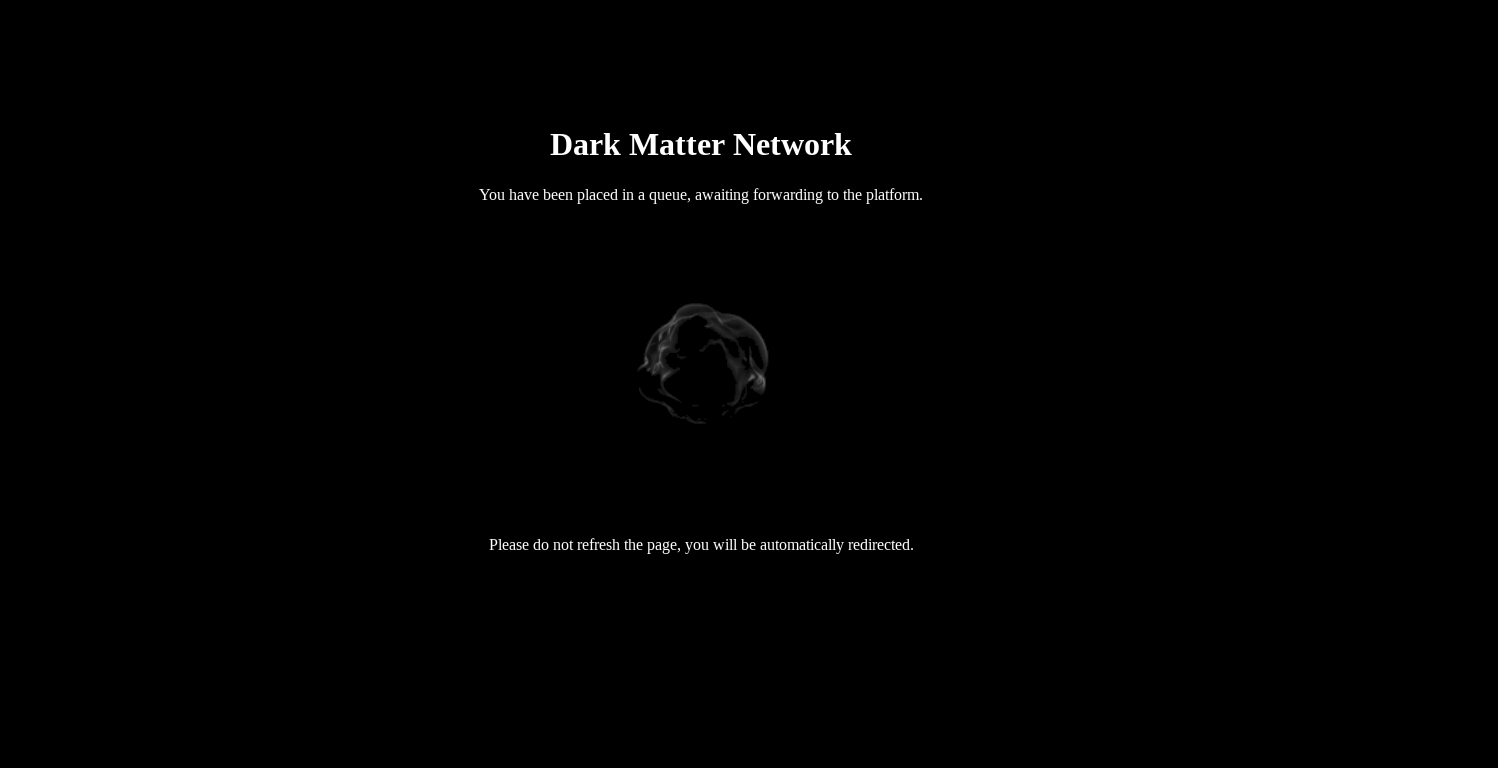 Fig 1. DDoS Mitigation Layer
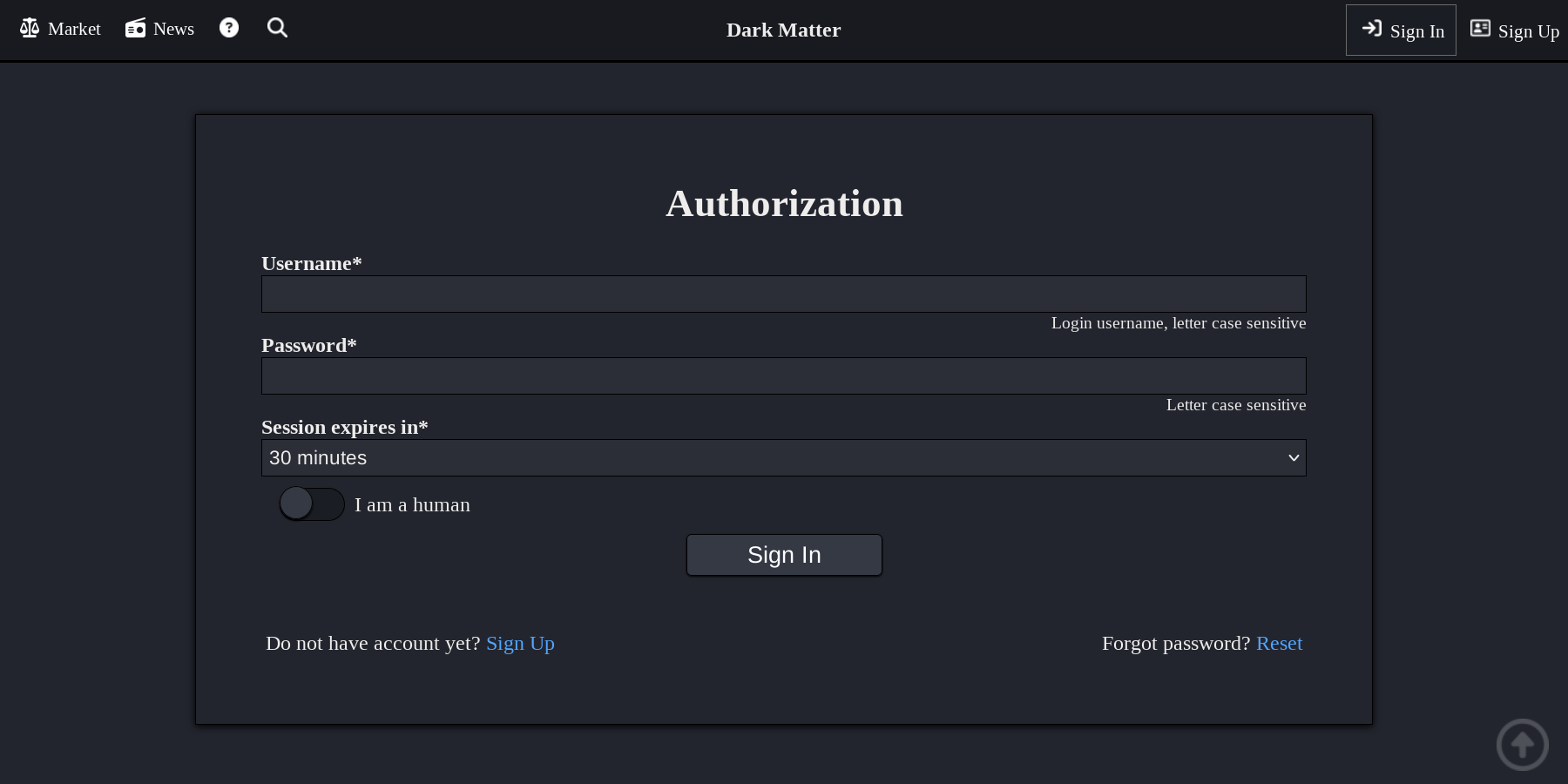 Fig 2. Encrypted Login Interface
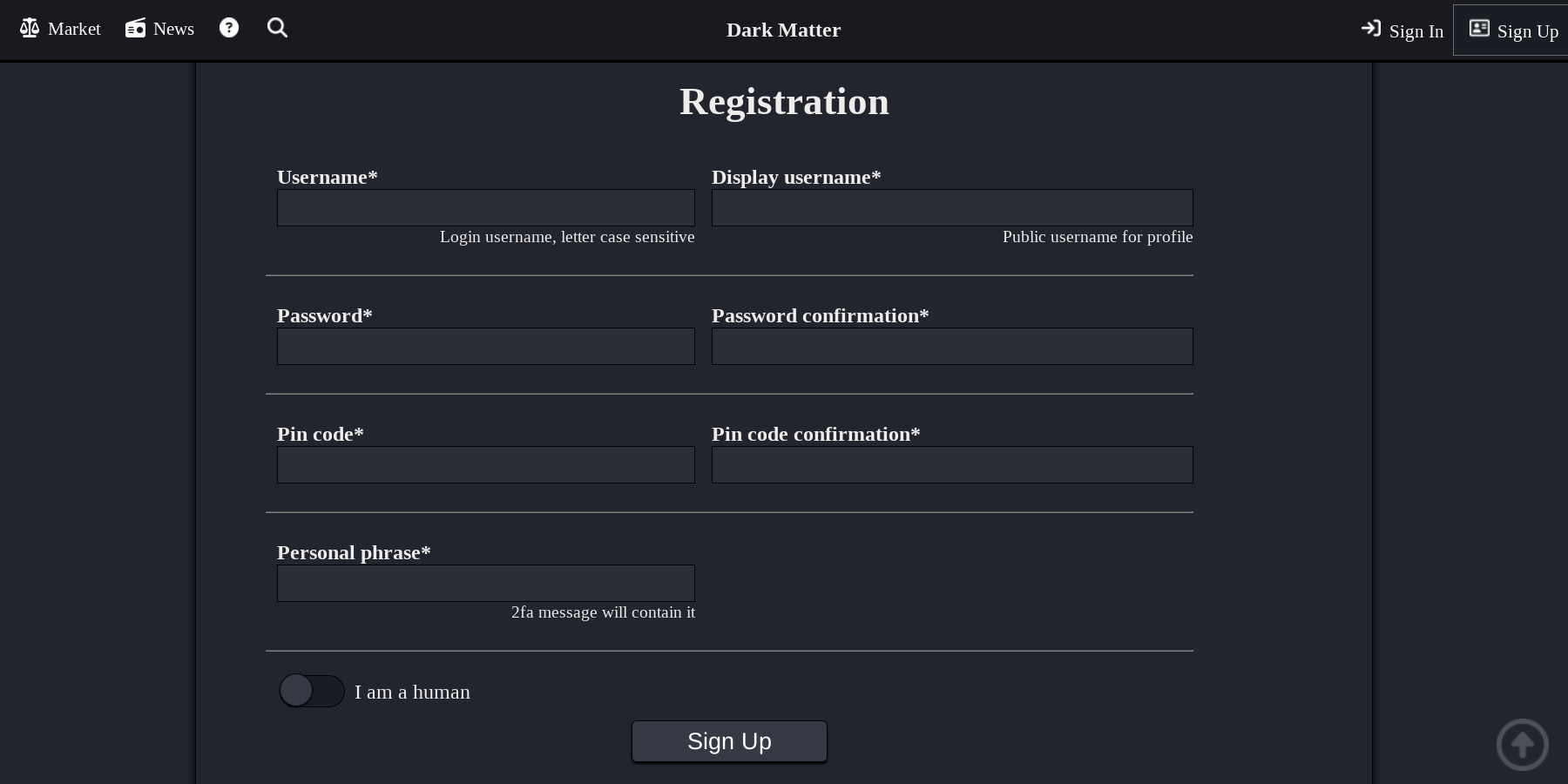 Fig 3. Registration Protocol
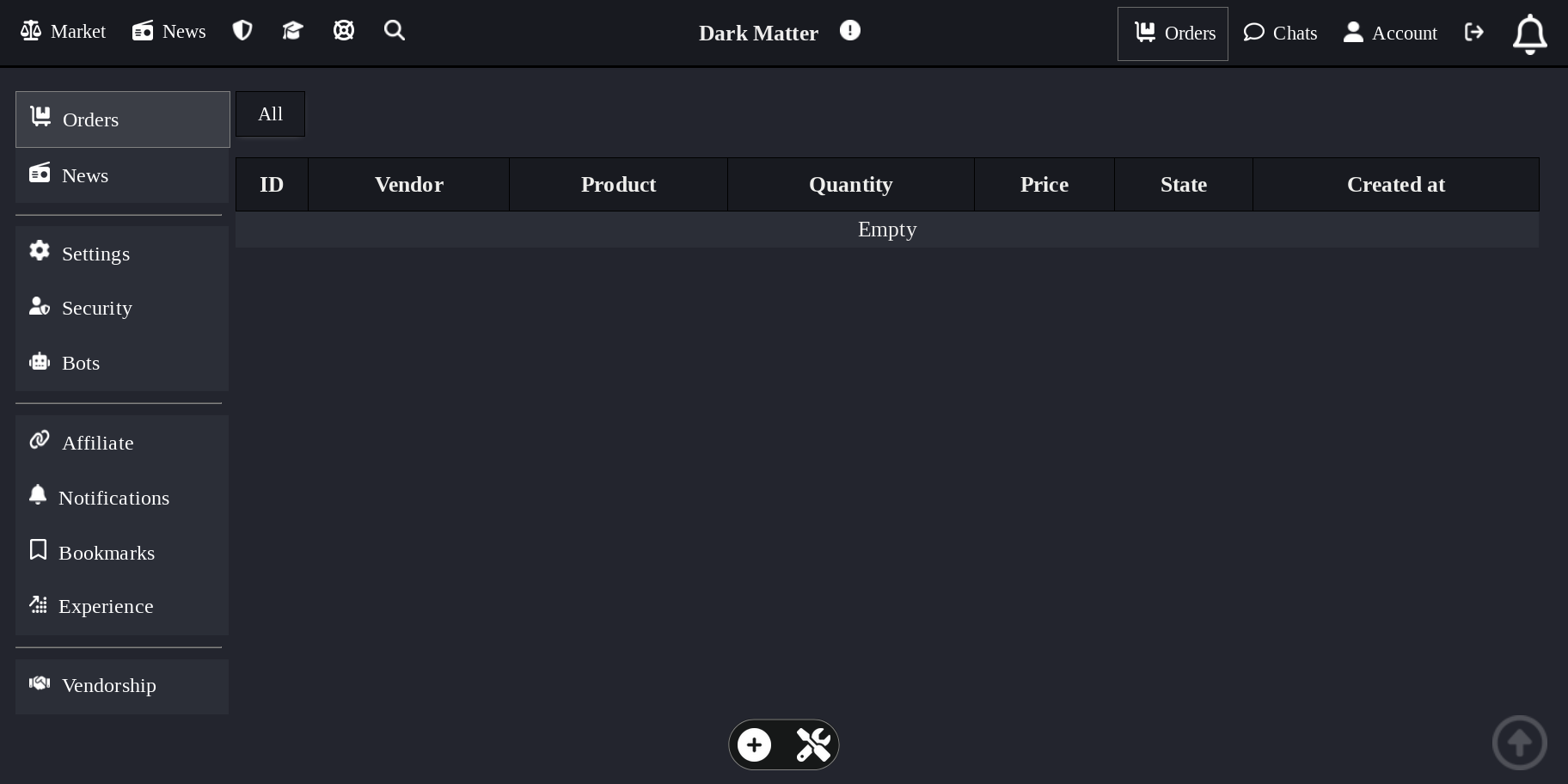 Fig 4. Main Dashboard UI
Community Analysis
Observers estimate the active user base to be in the tens of thousands, based on public forum activity and PGP key interactions. The platform maintains a strict "Vendor Bond" requirement, necessitating a deposit (waived for established vendors from other markets) to list goods. This economic barrier to entry is designed to reduce spam and low-quality listings.